
Elevator Hitch
Everything You Need to Know About Elevator Hitch
What Is Elevator Hitch?
Overview
A psychological horror game from Studio Investigrave, featuring their signature blend of RPG Maker aesthetics and narrative-driven horror. The game explores themes of identity, trauma, and the darker aspects of human nature.
Key Features
- Atmospheric Horror: Tension-building narrative without relying on jump scares
- Multiple Endings: Your choices determine the outcome
- Rich Storytelling: Deep character development and environmental storytelling
- RPG Maker Engine: Accessible yet polished visual style
Development
Created by Studio Investigrave (racheldrawsthis and Rix), known for their acclaimed horror titles including Dead Plate, Cold Front, and Elevator Hitch.
Story & Mystery
The Premise
The Protagonist
You play as Protag, a person who arrives late to work and finds themselves trapped in an elevator. What begins as an annoying inconvenience quickly transforms into a nightmarish loop through increasingly bizarre and terrifying floors.
The Central Mystery
The elevator doesn't just malfunction—it becomes a gateway to impossible spaces. Each floor reveals fragments of a disturbing reality that challenges the nature of the building itself and your presence within it.
The Nightmare Unfolds
The Loop Structure
The game operates on a cyclical structure. You're trapped in a repeating elevator journey, with each descent revealing new horrors. The repetition isn't just mechanical—it's narratively significant, forcing you to piece together the truth through accumulated experiences.
The Floors
Each floor you visit is more wrong than the last:
- Normal floors that subtly shift and change
- Impossible spaces that defy physical logic
- Hostile environments that actively threaten your existence
- Revelatory moments that hint at the deeper truth
The Truth
The Nature of the Building
The elevator and the floors aren't just haunted—they're fundamentally wrong. The game gradually reveals that the building exists in a liminal state between reality and something else. Your presence there is not coincidental.
Your Role
As the story progresses, you discover that your relationship to the elevator and the building is more complex than that of a simple trapped office worker. The game challenges your assumptions about who you are and why you're here.
Themes and Atmosphere
Isolation and Repetition
The game explores the psychological horror of being trapped in an inescapable loop. The elevator becomes a metaphor for cyclical trauma and the inability to escape one's circumstances.
Reality Breakdown
Each floor represents a further degradation of normal reality. The game uses this progressive dissolution to create a sense of mounting dread and existential uncertainty.
Gameplay Mechanics
Core Gameplay Loop
The Elevator Cycle
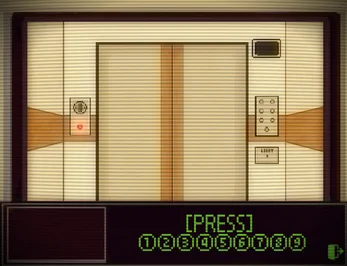
The fundamental gameplay revolves around riding the elevator and exploring floors. Each cycle follows a pattern:
- Enter the elevator - Press the button to descend
- Doors open - You're presented with a new floor
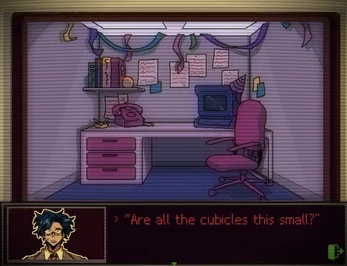
- Exploration - Investigate the environment
- Return or progress - Make choices about how to proceed
- Repeat - The cycle continues with variations
Interaction System
The game uses a simple point-and-click interface:
- Click to move - Navigate Protag through environments
- Click objects - Interact with items and environmental elements
- Read text - Absorb narrative information and clues
- Make choices - Some interactions offer multiple options
Environmental Challenges
Exploration Mechanics
Each floor requires careful observation:
- Safe spaces - Some areas are merely unsettling
- Dangerous zones - Certain floors pose direct threats
- Hidden details - Important clues are embedded in the environment
- Time-sensitive moments - Some situations require quick decisions
Puzzle Elements
While not puzzle-heavy, the game includes logic challenges:
- Pattern recognition - Identifying what's changed between loops
- Sequential logic - Understanding the order of events
- Environmental clues - Using details to inform decisions
- Narrative puzzles - Piecing together the story itself
Progression System
Knowledge-Based Advancement
Progress is primarily driven by understanding:
- Learning the pattern - Recognizing what's normal vs. abnormal
- Remembering details - Tracking changes across loops
- Making connections - Linking different floor experiences
- Understanding the rules - Figuring out how the elevator system works
Choice Impact
Your decisions affect the outcome:
- Dialogue choices - How you respond in key moments
- Action choices - What you choose to do on certain floors
- Timing decisions - When you choose to act or wait
- Exploration depth - How thoroughly you investigate
Endings Guide
Ending Philosophy
Multiple Outcomes
Elevator Hitch features different endings based on your choices and actions throughout the game. The endings aren't simply "good" or "bad" but represent different understandings of the nightmare.
What Determines Your Ending
The ending you receive depends on:
- Key choices made during critical moments
- Exploration thoroughness - discovering hidden details
- Pattern recognition - understanding the elevator's rules
- Willingness to break the loop - choosing to deviate from safety
The Endings
Ending 1: The Safe Loop
How to achieve: Follow the established pattern without deviation.
What happens: You remain in a stable, repeating cycle. The horrors are contained but never resolved.
Meaning: This ending represents acceptance of a comfortable hell—choosing the known nightmare over the risk of escape.
Ending 2: The Escape
How to achieve: Make specific choices that break the established pattern at critical moments.
What happens: You find a way out of the elevator and the building.
Meaning: This ending represents liberation but comes with the question of whether escape truly means freedom or simply a transition to another kind of trap.
Ending 3: The Truth
How to achieve: Discover all key information and make choices that prioritize understanding over escape.
What happens: You uncover the full nature of the elevator, the building, and your connection to both.
Meaning: This ending provides narrative closure and reveals the deeper horror underlying the supernatural events.
Achievement Strategy
First Playthrough Approach
Play naturally and observe everything. Your first ending will likely be the Safe Loop or Escape ending.
Completionist Route
To see all endings:
- Take notes on everything unusual
- Try different choices at key decision points
- Explore exhaustively on each floor
- Look for breakable patterns in the elevator's behavior
- Pay attention to details that seem insignificant
Tips & Strategy
Essential Tips for Success
Observation is Key
The game rewards careful attention:
- Watch for changes - Note what's different between elevator cycles
- Read everything - Text provides crucial context and clues
- Study the environment - Visual details often hint at what's coming
- Remember patterns - The loop follows rules you can learn
Managing the Horror
Pacing Yourself
The game's psychological horror can be intense:
- Take breaks if needed - The atmosphere is deliberately oppressive
- Play in sessions - The repetitive nature works better in chunks
- Don't rush - Missing details can lock you out of certain endings
Dealing with Jump Scares
While not heavily reliant on jump scares, the game has its moments:
- Expect the unexpected - Floors can change suddenly
- Audio cues - Sound design often telegraphs danger
- Visual tells - Learn to recognize when something is about to happen
Strategic Approach
First Playthrough Strategy
- Explore cautiously - Don't take unnecessary risks
- Document everything - Keep notes on floor contents and changes
- Try safe choices first - Understand the baseline before experimenting
- Accept confusion - The game deliberately withholds information
Subsequent Playthroughs
Once you understand the basic loop:
- Experiment boldly - Try risky choices you avoided before
- Test the boundaries - See what happens when you break patterns
- Focus on specifics - Target particular endings or secrets
- Compare notes - Look for what changed based on your choices
Technical and Quality of Life
Game Performance
- RPG Maker quirks - Accept some technical limitations
- Save strategically - The game's save system may be limited
- Browser compatibility - If playing web version, use updated browsers
Navigation Tips
- Clicking precision - Make sure clicks register before moving
- Movement speed - You can't always rush through sequences
- Interface familiarity - Learn the UI early to avoid confusion later
Advanced Secrets
Hidden Content Discovery
- Revisit familiar floors - They may change after certain events
- Try "wrong" actions - Sometimes failing is part of progression
- Look for environmental storytelling - Background details tell stories
- Connect narrative threads - Pieces of lore often link across floors
Ending Optimization
To efficiently see all endings:
- Identify decision points - Map where choices branch
- Save before critical moments - If the system allows
- Test one variable at a time - Isolate what changes endings
- Use process of elimination - Narrow down required actions

Frequently Asked Questions
Yes, Elevator Hitch is completely free on itch.io. Created by Studio Investigrave, it's a short horror experience (15-30 minutes).
Single playthrough: 15-30 minutes All endings: 1-2 hours
The game is a compact time loop experience with high replay value.
Elevator Hitch is available for: PC: Windows, Mac, Linux
Made with RPG Maker, part of Studio Investigrave's horror game collection.
Elevator Hitch has multiple endings determined by your choices during the time loop. Endings explore different aspects of the relationship between Protag and Coworker.
Latest Comments
No comments yet. Be the first!